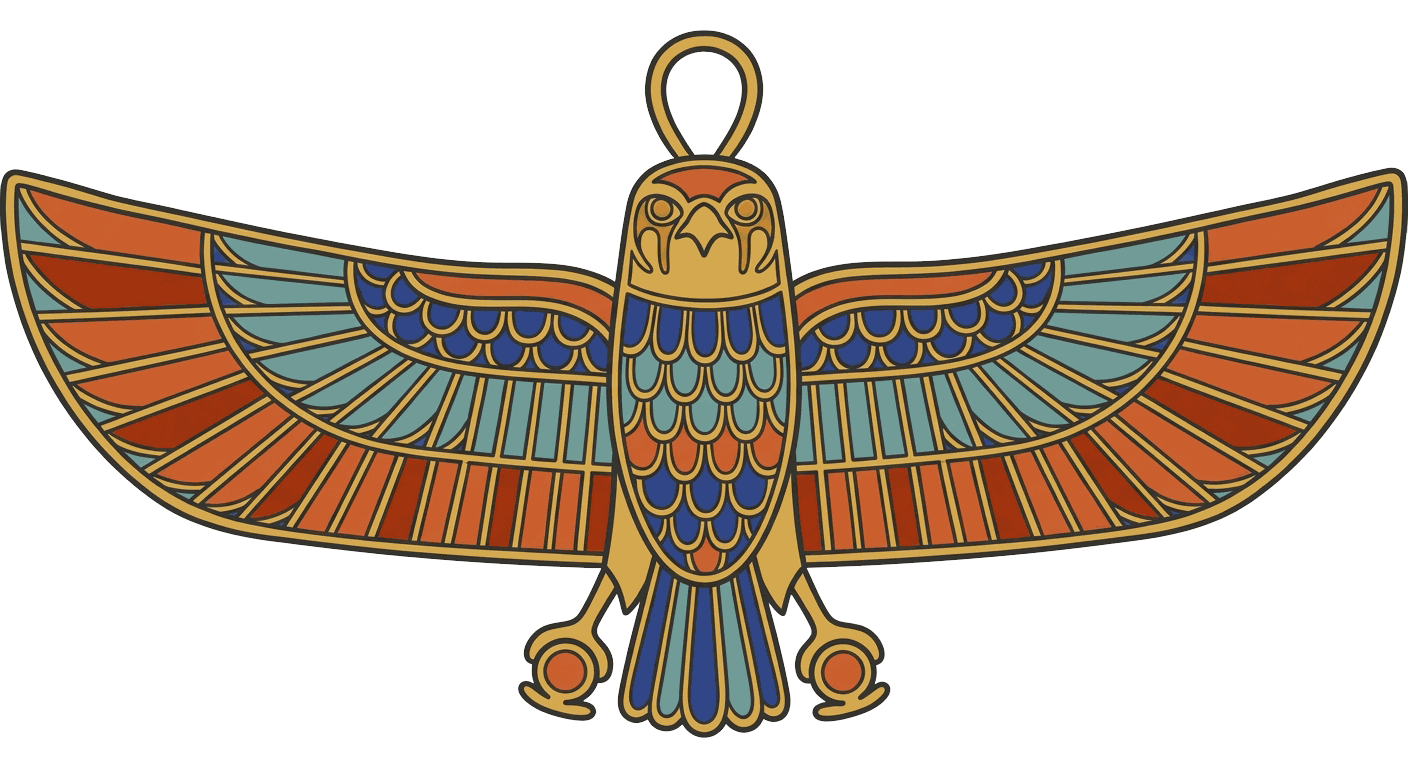
Innovation No. 54 of 77 in the book
Inlaid Jewelry
The lapis stripes on Tutankhamun's mask, cut to shape and locked into cells of gold
- When
- c. 1850 BCE
- Dynasty
- 12th Dynasty
- Era
- Middle Kingdom

Everyone recognizes Tutankhamun's mask. The blue stripes on the headdress are not paint — each one is a piece of solid lapis lazuli, cut to shape and locked into its own gold compartment.
Goldsmiths soldered thin gold ribbons onto a gold base to make a honeycomb of tiny cells, then fitted each cell with cut lapis, turquoise or carnelian so precisely the seams almost vanish.
The earliest great example is Princess Sithathoriunet's pectoral, c. 1880 BCE — small enough to hold in your palm, holding 372 separately cut stones.
Egypt did not invent the idea of setting stones in soldered metal cells — Sumerian goldsmiths at Ur did it earlier. Egypt drove it to a precision nobody had reached, and Egypt's version is the one the world copied.
The payoff: colour that cannot fade, because it isn't pigment — it's rock. The same principle is in the hard enamel pin on a modern jacket.
Sithathoriunet's pectoral was lifted from her tomb at Lahun in 1914 and is now in the Metropolitan Museum of Art. Her father was Senusret II. The design spells the king's name out in hieroglyphs — two falcons, a sun disc, and a promise of a million years. The pectorals of Princess Mereret, found at Dahshur, show the same standard of work.
Frequently Asked Questions
What is on the back of the pectoral?
The same design again. The goldsmiths engraved the reverse with the front's pattern and then added detail the front does not carry — on a surface that lay against the princess's chest in life and against her wrappings for four thousand years.
Why does the colour never fade?
Because it is not pigment. Each cell holds a cut piece of carnelian, lapis lazuli, turquoise or garnet, so the colour is the rock itself. The same principle sits behind the hard enamel pin on a modern jacket.